SEO vs. PPC for Greenville Businesses: Which Strategy Is Better?
SEO vs PPC is one of the most important search marketing decisions for a Greenville business that wants more qualified website visitors, calls, form submissions, or online sales.
Both strategies can put your company in front of people searching for what you offer, but they work differently, require different levels of investment, and produce value on different timelines.
For businesses in Greenville and nearby South Carolina markets, the right choice depends on your goals, competition, budget, website readiness, and ability to manage ongoing marketing work.
This guide explains how organic search and paid search compare, when each approach makes sense, how they can work together, and how to choose a practical search marketing strategy.
SEO vs PPC: How the Two Strategies Actually Work
SEO and PPC both target search demand, but they influence different parts of the search experience. Understanding that difference is more useful than treating one channel as universally better.
An SEO vs PPC comparison is useful only when it distinguishes how each channel attracts demand and how results are measured.
What SEO Does for a Business
Search engine optimization improves the ability of your website and online presence to appear in unpaid search results. The work may include improving service pages, publishing useful content, strengthening internal links, resolving technical issues, improving page experience, and building local relevance.
For a Greenville company, local SEO may also involve making it clear where the business operates, which customers it serves, and what services are available in specific communities.
A well-optimized page can continue attracting visitors after the initial work is completed, although rankings still require monitoring and ongoing improvement. The SEO vs PPC choice often begins with whether a business can invest time in content, technical quality, and organic visibility.
SEO is particularly valuable when customers research before contacting a business. Someone looking for a web development company, managed IT services provider, remodeling contractor, healthcare practice, or professional service may visit several websites before making a decision.
Helpful organic content can answer their questions before they are ready to speak with sales. In an SEO vs PPC plan, research-heavy buying behavior may justify investing in useful organic service content.
SEO is not free marketing. It requires strategy, technical work, content development, measurement, and maintenance. The main difference is that you do not pay the search engine for every organic click.
What PPC Does for a Business
Pay-per-click advertising places sponsored listings in search results or other advertising channels. With Google Ads, for example, an advertiser typically selects targeting criteria, writes ad copy, chooses landing pages, sets a budget, and pays when someone interacts with the ad according to the campaign’s bidding model.
In an SEO vs PPC plan, paid campaigns can provide controlled testing while the website continues developing its organic presence.
PPC can provide visibility more quickly than SEO, but speed does not guarantee profitable results. Campaign structure, keyword selection, geographic targeting, ad relevance, landing-page quality, conversion tracking, and follow-up all affect performance.
A Greenville business might use paid search to promote a high-value service, reach customers in a defined service area, test demand for a new offering, or generate inquiries while a longer-term SEO program is developing.
However, paid traffic usually stops when the campaign stops, unless the business has also built durable organic visibility.
The Main Difference Between Organic Search and Paid Search
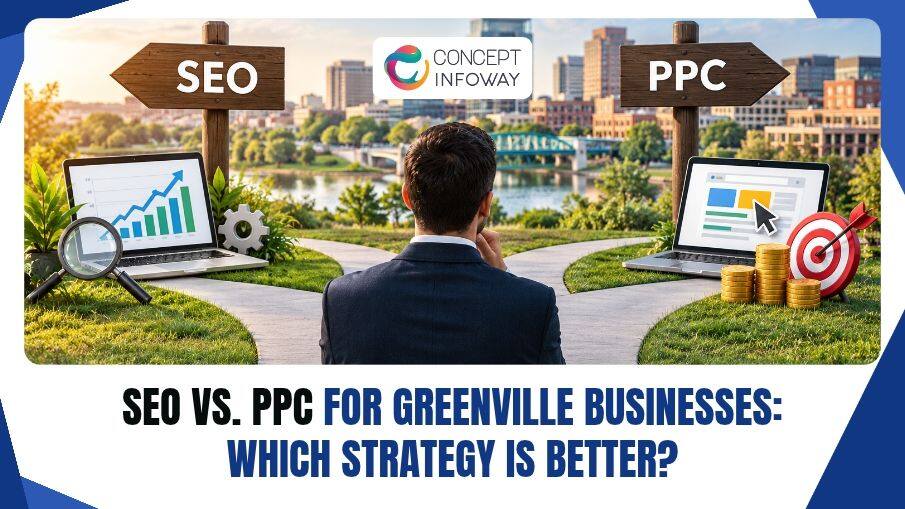
The simplest comparison is this: SEO builds an owned search asset over time, while PPC buys controlled exposure for as long as the campaign remains funded and properly managed. The central SEO vs PPC tradeoff is between earning lasting organic exposure and paying for more immediate placement.
That does not make SEO automatically superior or PPC automatically temporary. A company with an urgent sales target may need paid search now.
A company that wants to reduce dependence on advertising over the long term may need SEO. Many businesses benefit from combining both rather than choosing one in isolation.
The global Search Engine Optimization services market was valued at USD 83.98 billion in 2026 and is projected to grow from USD 94.16 billion in 2027 to USD 164.3 billion by 2032, registering a compound annual growth rate (CAGR) of 11.78% during the forecast period (2027–2032).
Get More Leads with Customized SEO and PPC Solutions.
Get a Free QuoteSEO and Paid Search Greenville SC: Which Option Fits Your Goal?
The better channel depends on what you are trying to accomplish and how quickly you need evidence. A useful decision starts with the business outcome rather than the marketing label. A clear business goal gives the SEO vs PPC decision a practical standard beyond impressions or clicks.
Choose SEO When Long-Term Visibility Matters
SEO may be the stronger foundation when you want to increase visibility for recurring searches, build trust through useful information, and create a reliable source of website traffic that is not tied to every individual click.
For long-term demand, the SEO vs PPC balance may favor work that keeps useful pages visible after initial publication.
It is often a good fit when:
- Your services have consistent search demand and customers compare providers before contacting one.
- Your website has a solid foundation but important service pages are weak, difficult to find, or poorly aligned with search intent.
- You can support ongoing technical improvements and content that answers real customer questions.
SEO is also useful for covering different stages of the buying journey. A service page may target a high-intent search, while a guide may help someone understand options, risks, or expected processes. Together, these pages can support both discovery and conversion.
This affects an SEO vs PPC evaluation because educational pages can support buyers before they are ready to inquire.
The trade-off is patience. Organic visibility can take time to develop, and the timeline varies by industry, competition, website history, content quality, and technical condition. Businesses should be cautious of anyone promising a fixed ranking or guaranteed outcome.
Choose PPC When Speed, Control, or Testing Matters
PPC may be more appropriate when you need to reach a defined audience quickly or want greater control over when and where an offer appears. It can be useful for a new location, seasonal demand, time-sensitive promotion, or service with strong commercial intent.
When speed matters, an SEO vs PPC strategy can use paid search to test offers before organic performance develops.
Paid search can also help test assumptions. For example, a business may learn which service language generates qualified inquiries, which locations produce stronger engagement, or which landing page message leads to more completed forms. Those observations can later inform website copy and SEO priorities.
The trade-off is ongoing cost and management complexity. A campaign can attract clicks without producing profitable leads if the keywords are too broad, the landing page is unclear, or conversion tracking is incomplete. High click volume is not the same as business growth.
Match the Channel to the Sales Cycle
A short, urgent buying cycle often gives PPC an advantage because prospects may be ready to act now. A longer or more considered buying cycle may benefit more from SEO content that establishes expertise over multiple visits.
The sales cycle should shape the SEO vs PPC mix because urgent buyers behave differently from people researching a major purchase.
For example, a person searching for emergency service may respond to a well-targeted paid ad and a clear call option. A business owner evaluating a website redesign may read service details, review examples, compare technical approaches, and return later before requesting a consultation.
The second situation usually requires more than a single ad click. That contrast connects the SEO vs PPC decision to how urgently a potential customer needs help.
The best decision also depends on customer value. If one qualified customer is worth a substantial amount to the business, carefully managed PPC may justify a higher acquisition cost than a lower-value transaction.
At the same time, SEO can become increasingly valuable when the same content attracts relevant prospects repeatedly.
Ready to Generate More Qualified Leads? Get Started with Our Team.
Get a Free QuotePPC vs SEO: Comparing Cost, Control, Trust, and Risk
The PPC vs SEO decision becomes clearer when the comparison includes more than speed. Business owners should evaluate how each channel affects budget control, credibility, data, website assets, and operational workload.
Comparing the SEO vs PPC cost structure requires looking at management effort, acquisition quality, and how visibility changes over time.
Budget and Cost Structure
PPC uses a direct advertising budget. You control spending more closely by setting campaign limits, but the cost of clicks can vary by market, keyword competition, targeting, and ad quality. The full cost also includes campaign management, creative work, landing-page improvements, tracking, and sales follow-up.
A realistic SEO vs PPC budget separates media spending from the people and tools needed to improve performance.
SEO shifts more of the investment toward strategy, technical implementation, content, and ongoing optimization. You are not charged for each organic visit, but the work still requires resources.
A business should not evaluate SEO solely by asking whether organic traffic is free; it should ask whether the resulting visibility, inquiries, and business assets justify the investment.
Control and Predictability
PPC offers more immediate control over targeting, location, schedule, budget, ad messaging, and landing pages. That control is useful, but auction conditions and campaign performance can change. A budget can produce many visits without producing enough qualified opportunities.
In an SEO vs PPC comparison, paid targeting is adjustable quickly, while organic search changes usually take longer to evaluate.
SEO provides less direct control over when a page appears and how much traffic it receives. Search engines determine rankings, and competitors are improving their sites at the same time.
The advantage is that strong organic pages may continue delivering value across many searches without a separate charge for each visit. The SEO vs PPC choice should recognize that organic visibility is less directly controllable than paid placement.
Trust and User Behavior
Some searchers prefer organic results because they see them as more relevant or informative. Others click paid listings because they are easy to notice and appear to match an immediate need. User behavior differs by query and industry, so assumptions should be tested with actual performance data.
Trust also depends on what happens after the click. A business can have a strong ranking or prominent ad and still lose the prospect with vague service descriptions, slow pages, poor mobile usability, missing local information, or an unclear next step.
Trust in an SEO vs PPC strategy depends on whether the landing page answers the customer’s question after the click.
Risk Management
With PPC, the main risks include wasted spend, irrelevant clicks, weak tracking, poor search-term controls, and campaigns that attract leads outside the company’s service area or capacity.
With SEO, the risks include investing in content that does not match search intent, overlooking technical barriers, targeting unrealistic terms, or waiting for rankings without measuring business outcomes. An SEO vs PPC risk review should also consider whether either channel attracts customers the business can actually serve.
A practical review should ask:
- Are the visitors relevant to the service and location?
- Can the website turn that interest into a call, form submission, purchase, or other meaningful action?
- Can the business respond quickly and consistently when a qualified lead arrives?
These questions apply to both Google Ads vs SEO and any broader search marketing comparison. The channel is only one part of the customer journey. Risk analysis for SEO vs PPC should include conversion tracking, channel dependence, and the cost of unqualified traffic.
How to Build a Search Marketing Strategy for a Greenville Business
Most businesses do not need to make a permanent either-or decision. They need a sequence that reflects current priorities, available resources, and the condition of their website. A blended SEO vs PPC approach can change as the website improves and the business learns which leads are most valuable.
Start With the Commercial Goal
Define the result before selecting the channel. A goal such as “get more traffic” is difficult to manage because traffic may not be relevant or valuable.
A stronger goal identifies the action that matters, such as qualified consultation requests, phone calls from a service area, product purchases, or applications.
Next, identify the services or products that should receive attention first. A company may have many offerings, but not all have equal margins, capacity, demand, or customer value.
Concentrating on the right pages and campaigns usually provides better insight than spreading a limited budget across every possible keyword. Deciding SEO vs PPC without a conversion objective makes it difficult to judge either channel fairly.
Audit the Website Before Sending More Visitors
Paid search and SEO both expose website weaknesses. Before increasing traffic, review whether the relevant page clearly explains the offer, who it is for, where the business operates, why the reader should trust the company, and what action to take next.
A weak landing page can undermine an SEO vs PPC strategy regardless of where the visitor came from.
Check practical details such as mobile layout, page speed, form operation, call tracking, analytics configuration, confirmation messages, and lead notification procedures. If a form fails or an inquiry reaches the wrong person, better rankings will not solve the underlying problem.
Concept Infoway LLC can be relevant when a business needs SEO services alongside website design, web development, website optimization, or digital marketing work. In that situation, the marketing plan should address both visibility and the website experience that converts attention into a measurable business action.
An SEO vs PPC plan should address weak service pages and broken lead paths before increasing exposure.
Use PPC and SEO Data Together
Paid search can reveal useful information quickly, including the search terms people use, the messages that earn engagement, and the landing pages that generate stronger responses. SEO can then use those insights to improve service pages, content priorities, and internal linking.
These observations can improve an SEO vs PPC strategy without making one channel a substitute for the other.
The reverse is also true. Organic search data can identify topics and services that deserve paid promotion. If a page attracts relevant visitors but ranks below major competitors, a targeted paid campaign may provide additional visibility while the organic work continues.
This combined approach reduces the risk of treating channels as isolated departments. It also helps businesses distinguish between a visibility problem, a relevance problem, and a conversion problem. Shared keyword and conversion insights make an SEO vs PPC strategy more informed than two isolated workstreams.
Consider Greenville and Nearby Service Areas Carefully
Local targeting should reflect how the business actually operates. A company serving Greenville may also work in nearby Upstate South Carolina communities, but it should not create thin or repetitive pages for every city without meaningful local value.
Location-specific pages should explain the service relationship clearly and provide information that helps residents or businesses decide whether the company is a practical fit.
Paid campaigns should use geographic settings and messaging that align with real service coverage, while organic pages should avoid implying availability that has not been confirmed. Local search geography changes the SEO vs PPC equation when advertising reach and real service coverage do not match.
For a local business, accurate contact information, consistent service details, useful location context, and a clear conversion path often matter more than adding a city name repeatedly.
Looking for More Qualified Leads? Call Our PPC Specialists
+1 832 290 9522How to Measure Whether SEO or PPC Is Working
The right measurement framework connects search activity to business outcomes. Rankings, impressions, and clicks can help diagnose performance, but they should not be the final definition of success. The strongest SEO vs PPC measurement plan follows visitors from their first search through a qualified business outcome.
Track the Full Path to a Business Result
For SEO, monitor the pages earning visibility, the queries bringing relevant visitors, engagement with important service pages, conversions, and assisted interactions. For PPC, review impressions, click-through rate, cost per click, search terms, landing-page behavior, conversion rate, cost per qualified lead, and revenue where tracking allows.
Tracking SEO vs PPC performance should include lead quality and closed business, not only sessions or advertising clicks.
The most important distinction is between a conversion and a qualified business opportunity. A form submission from outside the service area may count as a conversion in analytics but have little commercial value.
A phone call may be valuable, but only if it reaches the right team and receives appropriate follow-up.
Use a Practical Review Cycle
A useful review asks what changed, why it changed, and what action should follow. If paid clicks increased but qualified leads did not, investigate search terms, offer clarity, landing-page alignment, and sales handling.
If organic impressions increased but important actions did not, examine search intent and the page’s ability to answer the visitor’s question. A regular SEO vs PPC review makes it easier to investigate changes before shifting money or priorities.
Avoid changing campaigns or pages based on a single short period unless there is a clear tracking or budget issue. Search behavior can vary by season, service, competition, and local demand. Decisions become more reliable when they use consistent definitions and comparable periods.
Know When to Shift the Balance
A company may increase PPC emphasis when it has a time-sensitive goal, reliable conversion tracking, adequate follow-up capacity, and a campaign that produces acceptable qualified-lead economics.
It may increase SEO emphasis when it has recurring search demand, valuable topics not yet covered, and a website that can support sustained organic growth. As demand and capacity change, the SEO vs PPC mix should be adjusted using evidence rather than assumptions.
The balance can change as the business changes. A new service may require paid testing first. A proven service may deserve stronger organic coverage. A seasonal company may use both, with paid campaigns timed around demand and SEO work building visibility before the next season.
The objective is not to declare a permanent winner in the SEO vs PPC debate. It is to allocate effort where it has the best chance of supporting the business goal while reducing avoidable waste.
Wrapping Up
SEO vs PPC is not a simple contest between free traffic and paid traffic. SEO can build durable organic visibility and support customers who research before choosing a provider.
PPC can provide controlled exposure, faster testing, and a way to reach high-intent searchers when timing matters. Each also has risks when the website, tracking, targeting, or follow-up process is weak.
For a Greenville business, the practical choice is to start with the goal, evaluate the website and service area, understand the sales cycle, and measure qualified business outcomes rather than surface-level traffic.
In many cases, a coordinated approach works best: PPC supports immediate opportunities and testing, while SEO builds a stronger long-term search presence.
Concept Infoway LLC can help businesses evaluate SEO, paid search, website performance, and the relationship between visibility and conversion before committing to a broader search marketing strategy.
The next step is a focused review of your highest-value services, current search presence, website readiness, and the channel mix that fits your business. The right SEO vs PPC balance is the one that supports qualified demand within the business’s timeframe and resources.
Neither is automatically better. PPC can support faster visibility, while SEO builds longer-term organic presence. The right choice depends on budget, competition, sales cycle, website readiness, and whether the goal is immediate leads or sustained visibility. The SEO vs PPC decision depends on how soon qualified demand is needed and how well the website converts visitors.
PPC pays for targeted search exposure and usually stops when the campaign stops. SEO improves unpaid visibility through website, content, technical, and local optimization. PPC offers more immediate control; SEO can build lasting search assets over time.
Google Ads can begin generating impressions after a campaign is approved, but profitable results still depend on targeting and conversion quality. SEO usually requires more time because rankings develop through ongoing technical, content, and authority improvements. In an SEO vs PPC timeline, paid visibility can start sooner, while organic gains usually require sustained work.
Yes. Paid search can provide immediate reach and keyword insights while SEO develops organic visibility. Using both can help a business cover urgent opportunities, test messaging, and build a stronger long-term search marketing strategy.
The cost structure is different rather than automatically higher or lower. PPC includes ad spend and management, while SEO requires investment in strategy, technical work, content, and maintenance. Compare each channel by qualified leads, customers, and business value.
A new service may benefit from carefully managed Google Ads to test demand and messaging, while SEO builds supporting service content over time. The decision should consider margins, search demand, competition, conversion tracking, and available follow-up capacity. For a new offer, an SEO vs PPC plan can balance short-term testing with long-term search visibility.
Concept Infoway LLC provides SEO and related digital solutions for businesses in Greenville and other supported South Carolina markets. A consultation can help determine whether SEO, paid search, website improvements, or a coordinated approach fits your goals.