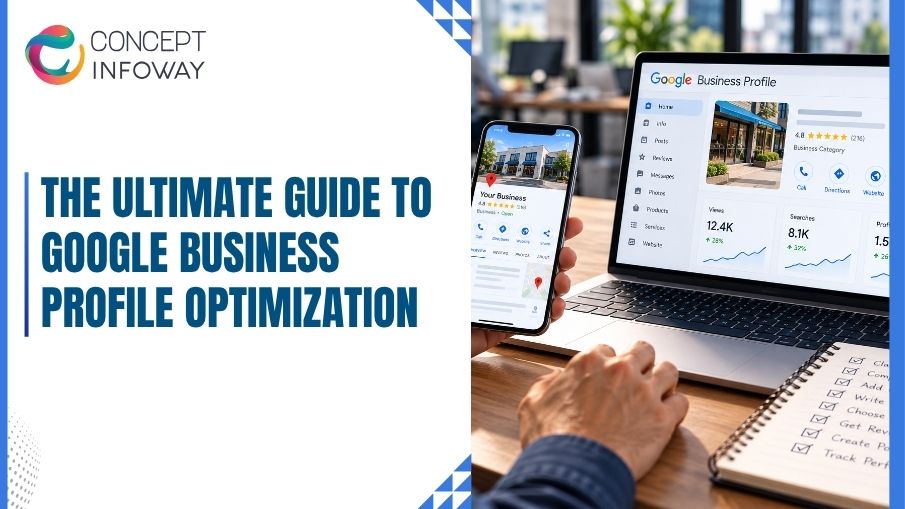
The Ultimate Guide to Google Business Profile Optimization
Google Business Profile optimization helps Greenville businesses appear more accurately when nearby customers search for the products or services they provide. If your profile is incomplete, categorized incorrectly, or rarely updated, potential customers may choose a competitor before visiting your website or calling your team.
This guide explains how to improve your profile step by step, from business information and categories to services, photos, reviews, posts, and questions and answers.
You will also learn which local SEO practices support visibility in Greenville and the Upstate, which mistakes can limit performance, and when professional SEO support may be worthwhile.
Google Business Profile Optimization Starts With the Right Foundation
A Google Business Profile is more than a business listing. It is often the first place a local customer sees your name, phone number, hours, services, photos, reviews, and directions. Before improving rankings, make sure the profile accurately represents the business customers will encounter when they contact or visit you.
Claim and Verify the Correct Profile
Start by claiming the official profile associated with your business. If an old listing, duplicate listing, or unverified profile already exists, avoid creating several new profiles to compensate. Duplicate listings can create confusion for customers and make it harder for Google to determine which information is authoritative.
The verification process and available options can vary by business and location. Complete the method offered within the profile management system, then review the listing from both the owner and customer perspective. That context can improve Google Business Profile optimization decisions.
Confirm that the public profile shows the correct business name, address or service area, phone number, website, and primary category.
Keep Core Business Information Consistent
Your business name should reflect the real-world name used on your storefront, website, signage, and customer communications. Adding extra keywords, locations, or promotional phrases to the name can create accuracy and compliance concerns. That makes it relevant to Google Business Profile optimization planning.
Check these details carefully:
- Business name, address, phone number, and website URL
- Regular hours, holiday hours, and temporary closures
- Service-area settings for businesses that travel to customers
- Appointment, booking, menu, ordering, or quote-request links
- Business description and available contact methods
Consistency matters beyond Google. Search engines, directories, map platforms, and customers all benefit when business information matches across the web.
A Greenville SEO company serving customers from a physical location should be especially careful to distinguish its actual address from nearby communities it serves, such as Spartanburg, Duncan, Easley, or Anderson. This factor should be reviewed during Google Business Profile optimization.
Review Access and Ownership Regularly
A profile should not depend on one employee’s personal login or an outdated agency account. Review access, recovery information, managers, and ownership permissions periodically.
Remove access that is no longer appropriate and make sure the people responsible for updates can respond promptly. This factor should be reviewed during Google Business Profile optimization.
This basic governance step is easy to overlook. It becomes important when hours change, a location moves, a new manager takes over, or a business needs to respond to an incorrect edit or customer review.
Boost Local Visibility with Google Profile SEO
Get a Free QuoteChoose Categories and Services That Match Search Intent
Categories help Google understand what a business does and which searches may be relevant. They also shape the services, attributes, and features available in the profile. The goal is not to select every category that sounds remotely related. This detail can strengthen Google Business Profile optimization work.
The goal is to describe the primary business accurately and support it with relevant secondary information.
Select the Most Accurate Primary Category
The primary category should describe the main service or business type customers associate with the company. For example, a company that primarily provides residential plumbing should not choose a broad home-services category simply because it includes more possible searches. The same consideration supports practical Google Business Profile optimization.
Consider the service that generates the most important customer demand, not necessarily the service with the highest margin or the largest internal department. Review the categories used by genuinely similar businesses in Greenville, but do not copy a competitor’s choices without confirming that they accurately describe your own operation.
Google may change available categories over time, so category decisions deserve periodic review. A business expanding into a meaningful new line of work may need to reassess its primary category and supporting categories, but frequent changes made without a business reason can create inconsistency.
The same consideration supports practical Google Business Profile optimization.
Add Relevant Secondary Categories Carefully
Secondary categories can clarify additional services, but they should remain closely related to the business. Too many loosely related categories may dilute the profile’s focus and create a poor customer expectation.
A practical test is simple: if a customer searched for that category and contacted your business, could your team confidently provide the service? If the answer is no, leave the category out.
Build a Useful Services List
The services area gives customers more detail than a category alone. Add the actual services you provide, using clear names customers understand. Organize them around customer needs rather than internal abbreviations. This detail can strengthen Google Business Profile optimization work.
For a local service company, that might mean separating emergency service, installation, maintenance, inspection, and repair instead of listing one vague term such as “solutions.” Include concise descriptions where the platform allows them, and keep wording consistent with the service pages on your website.
Service entries should not become a place for keyword repetition. A natural description that explains the work, property type, or customer problem is more useful than a string of nearby cities and search terms. This detail can strengthen Google Business Profile optimization work.
If you serve Greenville and surrounding Upstate communities, explain your service area accurately rather than inserting location names into every service title.
Improve Local Visibility With Complete, Helpful Profile Content
Once the foundation is accurate, improve the profile’s usefulness. Local search visibility depends on more than filling fields. Customers need enough information to decide whether your business is relevant, trustworthy, available, and worth contacting. That context can improve Google Business Profile optimization decisions.
Write a Clear Business Description
Use the description to explain what the business does, who it serves, and what makes the customer experience clear or convenient. Mention Greenville naturally when it helps establish local relevance, but do not turn the description into a list of neighborhoods or keywords.
A useful description answers questions such as:
- What does the business provide?
- Which customers or property types does it serve?
- Which nearby area or service territory is relevant?
- What should a prospective customer do next?
Do not include unverifiable claims, excessive promotions, links that the field does not support, or language that implies a ranking guarantee. Make the description match the website and the actual services delivered by the business. That point also matters for Google Business Profile optimization.
Add Photos That Show the Real Business
Photos help customers understand what they will see, buy, or experience. They also give a profile a more current and credible appearance than a listing with only a logo.
Useful image types vary by business, but may include the storefront, office, team, work vehicles, completed projects, products, interior spaces, equipment, and service process. That makes it relevant to Google Business Profile optimization planning.
A contractor serving Greenville, for example, can use project images that show workmanship and context without exposing private customer information. An office-based professional can show the reception area, team, and accessible entrance.
Use clear, recent images that represent the business accurately. Avoid stock photos presented as real locations, excessive text overlays, low-resolution images, and photos that reveal confidential information.
Keep file organization and upload permissions under control so outdated or misleading images can be removed. That point also matters for Google Business Profile optimization.
Use Posts for Timely Information
Google Business Profile posts can support timely communication about events, seasonal services, new offerings, announcements, and useful customer information. They should not replace a website page or a broader content strategy, but they can help a profile feel active and informative.
A strong post has one clear topic, a useful image when appropriate, and a direct next step. Examples include preparing a property for seasonal maintenance, explaining a new appointment process, or highlighting an upcoming local event. Review posts periodically and remove or update information that is no longer accurate.
The value of posts is not simply publishing frequently. Relevance and accuracy matter more than filling the profile with repetitive promotions. If your business cannot maintain timely updates, publish only when you have something genuinely useful to say. This factor should be reviewed during Google Business Profile optimization.
Attract More Customers with Google Profile SEO
Get a Free QuoteBuild Trust Through Reviews, Questions, and Customer Experience
Reviews and profile interactions influence how potential customers evaluate a business after discovering it. They are also operational feedback. A business that treats reviews and questions as part of customer service will usually create a stronger experience than one that treats them as a one-time SEO task.
Create a Responsible Review Process
Ask real customers for honest feedback after a completed purchase, appointment, project, or service interaction. Make the request easy to understand and send it through a process your team can manage consistently.
Do not offer incentives for positive reviews, pressure customers to change feedback, or ask only selected customers whose opinions are expected to be favorable. That makes it relevant to Google Business Profile optimization planning.
Respond to reviews in a calm, specific, and professional manner. Thank customers for positive feedback without repeating a generic sentence every time. For a negative review, acknowledge the concern, avoid discussing private details publicly, and invite the customer to continue the conversation through an appropriate direct channel.
A review response cannot repair every service issue, but it shows prospective customers how the business handles public feedback. If a complaint points to a recurring problem, address the underlying process instead of focusing only on the wording of the response.
Manage Questions and Answers Proactively
The Questions and Answers area can address practical concerns before a customer calls. Review it regularly for unanswered questions, inaccurate answers, or questions that require a more specific response.
Common topics may include appointment requirements, service availability, parking, payment methods, accessibility, product options, or service-area limits. That makes it relevant to Google Business Profile optimization planning.
Answers should be factual and easy to understand. If a detail changes often, direct customers to the most current contact or website page rather than leaving a permanent answer that may become outdated.
Business representatives should identify themselves appropriately and avoid using the section as a place for artificial keyword promotion. This factor should be reviewed during Google Business Profile optimization.
Connect the Profile to the Customer Journey
A profile can attract attention, but the next step must work. Test the phone link, website link, booking path, contact form, and directions from a mobile device. A profile that generates calls but sends users to a broken page or an unclear form is not fully optimized.
Concept Infoway LLC can help businesses connect local SEO work with website optimization, content, and conversion paths when profile traffic exposes a broader digital experience problem. That connection matters because visibility alone does not guarantee qualified leads or completed inquiries. This detail can strengthen Google Business Profile optimization work.
Avoid Common Google Business Profile Mistakes That Limit Local Search Ranking
Many local visibility problems come from avoidable inconsistencies rather than a lack of effort. A business may publish posts and request reviews while still losing potential customers because its category, address, service area, or landing page is inaccurate.
Use the following checks as a practical Google Business Profile checklist before making major changes.
Watch for Spam and Inconsistency
Common problems include keyword-stuffed business names, virtual or temporary addresses used improperly, duplicate listings, unsupported service areas, irrelevant categories, and several profiles created for one eligible business location. These shortcuts can reduce trust and create profile-management problems. The same consideration supports practical Google Business Profile optimization.
Also check for differences between your profile and your website. If the profile says the business opens at 8:00 a.m. but the website says 9:00 a.m., customers do not know which information to trust.
The same problem occurs when phone numbers, addresses, business names, or service descriptions vary without a clear reason. That context can improve Google Business Profile optimization decisions.
The global SEO services market was valued at USD 74.9 billion in 2025 and is projected to grow from USD 83.98 billion in 2026 to USD 148.86 billion by 2031, registering a compound annual growth rate (CAGR) of 12.12% during the forecast period (2026–2031).
Do Not Treat Reviews as a Ranking Shortcut
Review quantity alone does not replace a strong customer experience, accurate information, or a technically sound website. Buying reviews, generating fake reviews, or asking staff to create customer-like reviews creates serious trust and platform-risk concerns.
A better approach is to improve the service process, request feedback consistently, respond professionally, and use recurring complaints to guide operational improvements. Local search ranking factors are interconnected; profile signals work best when supported by a credible business and helpful website. That point also matters for Google Business Profile optimization.
Avoid Ignoring Website and Technical Problems
A complete profile cannot compensate for a website that loads poorly, hides contact information, lacks service detail, or fails on mobile devices. Local customers often move from a map listing to a website before calling, especially when comparing providers.
Review the pages linked from the profile. They should explain the relevant service, reflect the service area honestly, provide a clear contact path, and avoid sending every visitor to a generic homepage. That point also matters for Google Business Profile optimization.
Local SEO services near me searches may bring a visitor to your listing, but the website experience helps determine whether that visitor takes action.
Measure Actions, Not Just Position
Track profile interactions such as calls, website visits, direction requests, messages, and booking actions where available. Compare these signals with real leads and completed sales. A change in visibility is useful context, but it is not the same as revenue. The same consideration supports practical Google Business Profile optimization.
Use a consistent review schedule, such as a monthly accuracy check and a deeper quarterly review. Look for changes in calls, search queries, review themes, service demand, and customer questions. If a profile is managed by an internal team, document who owns updates and how changes are approved.
For businesses comparing a digital marketing agency in Greenville, SC, ask how reporting will connect profile activity to business goals. A useful engagement should explain what is being changed, why it matters, what can be measured, and which results depend on factors outside the agency’s control.
Need Google Profile Help? Contact Our SEO Experts
+1 832 290 9522Wrapping Up
Google Business Profile optimization is an ongoing accuracy and customer-experience process, not a one-time form submission. Start with the correct profile, consistent business information, and an accurate primary category. Then improve the services, description, photos, posts, reviews, Questions and Answers, website path, and measurement process.
For a Greenville business, local relevance should be specific and honest. Show where you operate, explain what you provide, and make it easy for the right customer to call, visit, schedule, or request information. Avoid shortcuts such as keyword-stuffed names, duplicate listings, fake reviews, and unsupported service areas.
Concept Infoway LLC supports businesses with SEO services, website optimization, web development, and related digital marketing needs when local visibility and website performance need to work together.
Whether your team manages the profile internally or works with a specialist, the best next step is a structured audit that identifies inaccurate information, missed opportunities, technical obstacles, and actions that can be measured over time.
FAQs - Google Business Profile Optimization
Google Business Profile optimization is the process of improving a local listing’s accuracy, categories, services, photos, reviews, posts, and Q&A so customers can find and evaluate the business more easily.
Review core information whenever hours, services, contact details, or locations change. A monthly accuracy check and quarterly content review can help catch outdated information and customer questions.
Choose the category that most accurately describes your primary business activity. Add closely related secondary categories only when you genuinely provide those services to customers in your service area.
Reviews can support customer trust and contribute to local relevance, but they are not a guaranteed ranking shortcut. Request honest feedback, respond professionally, and improve the service issues customers mention.
Keep business information accurate, choose relevant categories, describe services clearly, add authentic photos, earn genuine reviews, answer questions, maintain your website, and avoid keyword stuffing or duplicate listings.
Professional help may be useful when your listing has duplicates, inconsistent information, technical website issues, or limited internal resources. Ask for a documented process, measurable goals, and clear reporting.
A Greenville-based digital marketing agency may help audit and manage profile information, local content, reviews, and website connections. Confirm the agency’s process, access controls, reporting, and service scope before hiring.